[TLM Editorial Viewpoint]
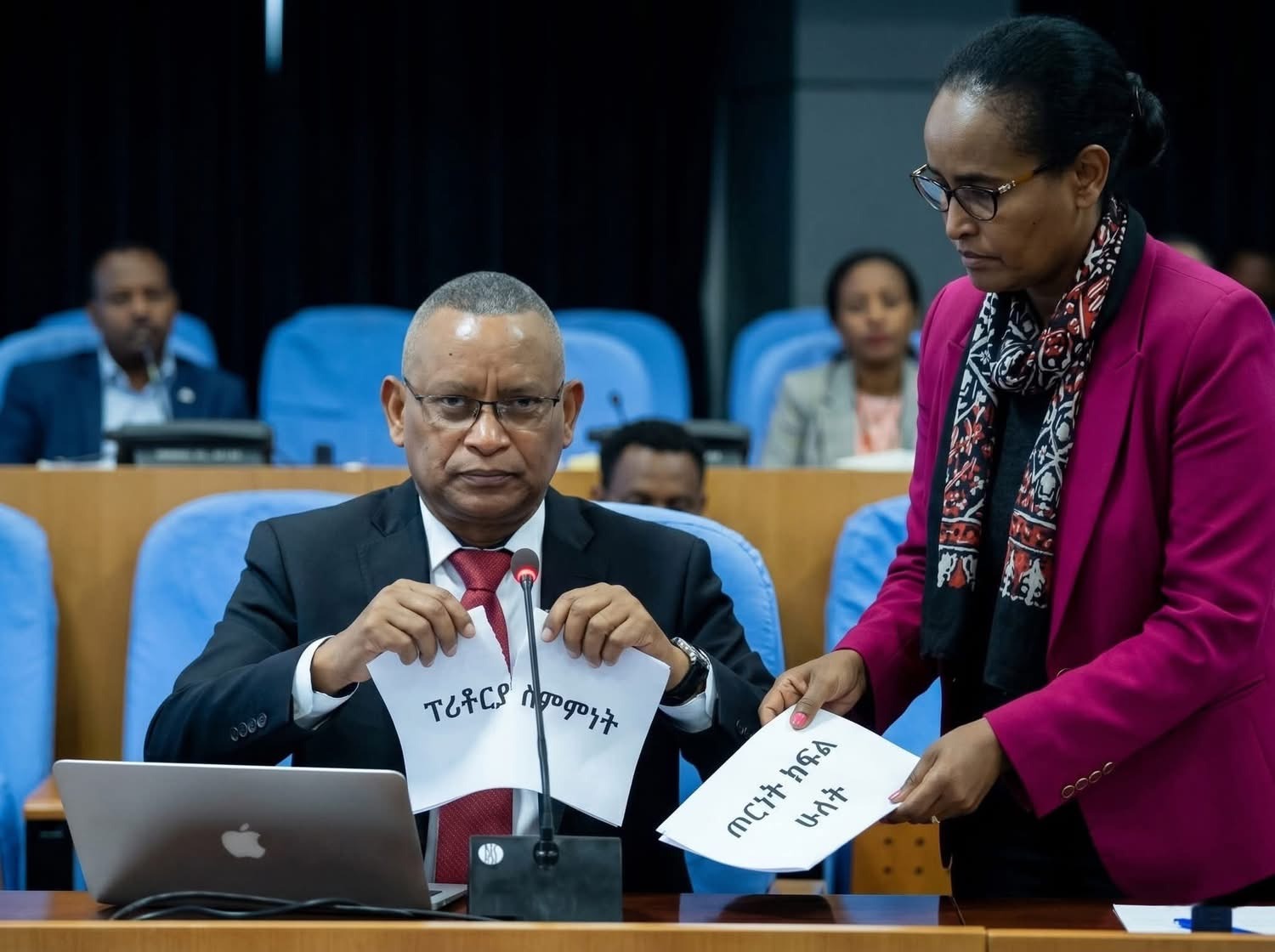
Over the past 3 years since the Pretoria peace agreement was signed, the media and public discourse have largely focused on reports of TPLF corruption, gold theft, repression, democracy, justice, and accountability. On the other hand, the TPLF leadership’s daily activities center on its power struggle and alliance (ፅምዶ) and its preparation for war, military parades, and weekly statements to bring back its old and expired regional government by dismantling the interim administration, tearing up the Pretoria Cessation of Hostilities Agreement (COHA), and warmongering to escalate conflict, making Tigray a battlefield. What has TPLF leadership said? What has Debretsion done? What might the TPLF’s alliance with Shaebia do next? The historical facts reveal that the relationship between the TPLF and EPLF has been unremarkably characterised mainly by persistent disputes and disagreements that led to the Badme War of 1998 and the genocidal war of 2020-2022. This suggests that they might be guided by the saying “Keep your friends close, but your enemies closer.” The key question is, “Which one?” This fixation even extends to minor issues, such as the TPLF-financed media, illustrating the intense media frenzy surrounding the group. This concentrated focus on the TPLF has created an environment where evading their political activities is almost impossible, regardless of our geographical location. They are documented worldwide—across the United States, Europe, the Middle East, and Africa.
The main duty of leadership is bringing people together with a shared focus on the national interest, especially when rallying against a common enemy. A coherent and visionary leader knows how to connect different opponents, making them seem like part of the same story. It’s important that the message is clear and accessible to everyone, ensuring even the least informed can understand the challenges ahead. With careful and consistent communication, it’s possible to shape the narrative for the common good, turning struggles into opportunities for hope and transforming hardships into moments of economic recovery. Tigray today faces a daunting task: removing a party that is not only tyrannical and repressive but also a mercenary and criminal that sabotages the spirit of the Pretoria peace agreement, which has declared it null and void. Instead of promoting healing, economic recovery, unity, and peace, the TPLF leadership often stirs up more conflict and bloodshed.
During national crises that affect the nation’s political, social, economic, or international standing, political parties typically assume greater responsibility for the nation’s welfare. However, in Tigray, power remains in the hands of a single and unaccountable party. The TPLF’s public support is diminishing because of its maladministration, corruption, repression, and misuse and theft of public resources, which are worsening day by day under the unaccountable leadership, resulting in ongoing conflict and violence. Today, Tigray stands at a critical juncture, facing a choice between continuing conflict and resentment or leading towards reform, peace, and reconstruction of what has been destroyed by the genocidal war.
Visionary leaders are essential in shaping an environment that either fosters peace or undermines it. South Africa is a prime example that illustrates the influence of leadership under Mandela. Leaders may choose to compromise when faced with danger or opt to fight. Botha chose to fight, much like the TPLF, while de Klerk decided to pursue peace and reconciliation, abandoning the idea to deny the majority of Black South Africans their civil rights and majority governance; his actions still hold considerable significance. The key takeaway is that if the South Africans’ leaders in 1990 had refused to engage in negotiations and had not agreed to political reform, it could have led to irreconcilable more bloodshed.
Embracing peace is difficult, especially when dealing with complex and risky political figures who seek to hide their true intentions. Tigray belongs to all Tigrayans, and the people should have equal freedom and political and economic rights. The people of Tigray have fought for democracy, which remains the primary goal of their struggle. The TPLF is taking away the people’s self-determination, freedom, and liberty and subduing them using political repression and gun violence.
Developing a legal and political framework that clearly defines citizens’ democratic rights, freedom, liberty, and a free press, alongside establishing a competitive multi-party system and conducting free and fair elections, is the only solution for Tigray to ensure its future survival. The democratic, free, and fair election process holds leaders accountable if they do not deliver political, economic, and social developments to their people, which is crucial in building and fostering a robust civil society and a healthy democracy and good governance and accountability. However, we Tigrisyans must seek both political and economic democracy. Currently, the TPLF leadership is waning, resulting in increased authoritarianism, repression, exploitation, and human rights abuses. Evidence suggests that the TPLF leaders seem to prioritise their personal interests over the interests of Tigray and its people.
The TLM editorials recognise that nation-building is a slow process that demands a coherent strategy and policy in which progress and setbacks coexist. The TPLF’s political system aims to uphold an unequal power structure, believing no opposition will challenge the current order in Tigray. It uses bribery and land promises to rally the population, risking the emergence of a true democratic movement. The TPLF political journey may cause substantial harm and unforeseen crises to the people of Tigray and to the existence of Tigray at large. The party leadership bears responsibility and will be held accountable for the national disaster it is causing, including the effects of genocidal war.
Social media is flooded with propaganda from unreliable voices within the Tigray diaspora and local media, seeking to destabilise and convince the people of Tigray deceptively to support its alliance (ፅምዶ) with Shaebia and Fano. Tigrayans should resist the TPLF’s deceptive and manipulative propaganda, and peace is the only way for Tigray to avoid more destruction and the loss of lives. The TLM editorials remain hopeful that the ongoing violent power struggle will end without bloodshed, trusting the judgement and common sense of the people of Tigray to say no to war. Over the past three years, we have all understood the high stakes involved, yet regrettably, our perspectives on the crisis have been ignored. The division is tearing Tigray apart. The TPLF dismantled the people of Tigray’s unity with its shortsighted strategy, authoritarian mindset and power struggle that is rooted in its rigid political ideology.
Following the Pretoria Agreement, Tigray was filled with euphoria, relief, and ambitious hopes that felt achievable. Sadly, we are now confronting the most difficult period in our history, marked by pain, suffering, and fear for our country’s future under TPLF leadership, led by Debretsion. Tigray has faced significant hardships over the past 50 years, including injustice, human rights abuses, suffering, and the aftermath of genocidal trauma. These hardships have intensified, deepening the pain for our people. These facts are undeniable and can be recognised by anyone, such as widespread corruption, bad governance, poor leadership, nepotism, illicit gold trade, and land grabbing, all driven by the few politicians and their cronies.
It is deeply distressing to consider the humiliation and suffering inflicted on our people by the criminal TPLF leadership actions of Debretsion and the network of cahoots. Tigray does not deserve such egregious leadership, which fails to avert imminent peril and instead engages in launching another war. Tigrayans must remain committed to resolving the ongoing political crisis created by the TPLF and corrupt generals. The recent seizure of political power by outlaws diverts attention from the core issues by propagating a misleading narrative that the TPLF’s main aim is to remain in power to avert accountability for its theft of public resources and human rights abuses.
The core argument emphasises that the media should actively expose and oppose the unconstitutional and illegal power grab by force and the TPLF’s control over the resources of the people of Tigray. This involves highlighting the corruption, theft of public resources, land seizures, human rights abuses, and famines caused by poor policies. Such transparency is vital to inform the public and raise awareness, seeking justice, accountability, peace, and security. Additionally, we must oppose inciting conflict as political leverage and continue to campaign for the rehabilitation of vulnerable populations affected by genocidal war trauma. The TPLF remains unapologetic for its failure to anticipate and prepare for the genocidal war.