[TLM Editorial Viewpoint]
The so-called TPLF leadership has completely betrayed the people of Tigray by forming a dangerous alliance (ፅምዶ) with the ruthless regime of Eritrea (Shaebia), known for its bloodshed actions and North Korean-style authoritarian rule, including infanticide (such as the slaughter of schoolchildren at Ayder, Mekelle), illegal occupation of Tigray territories, mass displacements, abductions, disappearances and torture of its citizens and Ethiopians along the Tigray and Afar borders (Irob, Zelambessa, Adiabo, Kunama). The regime of Eritrea has also participated in the mass deportation of Ethiopians and the confiscation of their properties both before and after the conflict and the inhumane treatment of Tigrayans. Last but not least, Shaebia committed genocide, crimes against humanity, ethnic cleansing, and war crimes, including rape and sexual violence against women and young girls in Tigray.
Since Shaebia’s rise to power, Eritrea has become a pariah state in Africa, known for its harsh methods of managing internal and external conflicts. Recognizing that Eritreans, like people everywhere, have no basic human rights and freedom. Shaebia aggressively waged war against its neighbors and began executing perpetual wars with its neighbors to shift attention to its economic difficulties. Between 1995 and 1998 alone, Eritrea attacked and occupied Sudan to overthrow its regime, as well as Yemen, Djibouti, and finally Ethiopia. It looks like there is no light at the end of the tunnel for Eritrea, which is struggling to coexist peacefully with its neighbors but chose the road of conflict that acts in aggression and impulsively.
One of the most striking things about Eritrea is that it still lacks a well-organized government structure with clear annual budgets and proper fund distribution. Since assuming office, the Eritrean regime has become an international war criminal and mass murderer.
The TPLF leadership’s degenerated minds have intentionally and unintentionally put the people of Tigray in danger of extinction by overlooking the proxy war, which has made coexistence in Ethiopia seem almost impossible. Now, Tigray is at a crossroads—facing a difficult choice between continuing war and embracing peace. Tigray might endure a prolonged war, making the future of our people living in peace uncertain. At this uncertain moment, Tigray needs coherent, strategic, and visionary leadership that can lead it out of the genocidal war and rebuild a better future for people to exercise their democratic rights, freedom, and liberty.
Given the long-standing and intense conflict, it’s understandable to wonder how the TPLF leadership and the TDF generals might have been persuaded or even coerced into forming an alliance (ፅምዶ) with Shaebia and surrendering Tigray to Shaebia. Unwavering support is a hard phenomenon to accept. What comes through here isn’t just reason or a willingness to understand and admit mistakes. Instead, it’s driven by greed and a strong desire to stay in power and escape accountability using conspiracy, deception, and lies, no matter how unlikely it seems.
Unless bold steps are taken, the conflicts in our region could become even harder to resolve, leading to widespread suffering and economic turmoil. How these crises develop will depend mainly on whether the involved parties are willing to see reason and work toward fair and lasting solutions or whether new leaders emerge and dedicate themselves to peace. The Eritrean regime has long been the troublemaker in the Horn of Africa, fuelling conflicts and wars since taking control of Eritrea.
It’s important to keep in mind that the turmoil we experienced during the genocidal war could become even more intense in 2026 due to the ongoing global leadership crisis and challenges to the international order due to regional rivalry in the Middle East and Horn of Africa. This brief overview of the regional peace and security dilemma is becoming obvious, with Saudi Arabia, Turkey, Egypt, Sudan, Somalia, and Djibouti on one side and the Arab Emirates, Ethiopia, Israel, Somaliland, and General Hamati, leader of Sudan’s rebel group, on the other, highlighting these important developments. It also encourages us to consider potential steps to work toward resolving our internal differences and conflicts to bring back our unity. If we fail to rebuild our unity, it’s possible that Tigray may become a continuous battleground between Saudi Arabia and the United Arab Emirates, with many internal and external forces operating throughout the country, making the safety and security uncertain for the people of Tigray. Additionally, widespread poverty and economic inactivity could fuel instability and violence, creating a complex situation that demands our attention.
The TPLF leadership and the cost of an insatiable desire for power:
The genocidal war, which started in 2020, has ruined Tigray. The human cost has been too high. What began as a constitutional process for voting rights turned into the deadliest conflict of the 21st century. If TPLF had responded to Abiy’s demands by accepting the vote extension, it might have prevented a catastrophic war that caused nearly a million deaths, displaced over 2 million people, forced over 70,000 to seek refuge in Sudan, and left Tigray’s economy and infrastructure in ruins.
Responsible leaders have upheld the international laws and fundamental principles of non-intervention and non-aggression to preserve peace and resolve border disputes and conflicts, but the Eritrean regime has not. The Pretoria peace agreement has brought relative peace in silencing the guns, thanks to the vital role these various countries and organizations play in the peace process. Without these countries and organizations, the genocidal war could have led to the loss of unmanageably more lives. Therefore, strong diplomatic skills are essential for many talented leaders to help nations resolve conflicts and disagreements peacefully, a skill the TPLF leadership lacks.
Even with the TPLF leadership looting Tigray resources, they could have spared the people of Tigray the painful conflict by peacefully stepping down to allow a new all-inclusive transitional government and laid the foundation for democratic reform. The TPLF could have revitalized and implemented political programs to re-establish democracy and rebuild strong civic organisations in Tigray after the genocidal war. However, the TPLF is now a sitting duck; the power ball has rolled away from it and is now in the hands of the Shaebia tightly entrenched in Tigray. We want to remind the TPLF of the damage it caused us all by clinging to power for too long. It is time for the failed TPLF leadership to relinquish power.
Nevertheless, despite being aware of all these facts, thousands of diaspora Tegaru have shown their unwavering support for the TPLF leadership. From a moral, ethical, legal, and spiritual perspective, how can the supporters avoid complicity in TPLF leadership’s theft and misuse of public resources, maladministration, and corruption? By endorsing, commending, defending, and justifying the TPLF leadership failures, the members and supporters have become accessories to criminality against the people of Tigray.
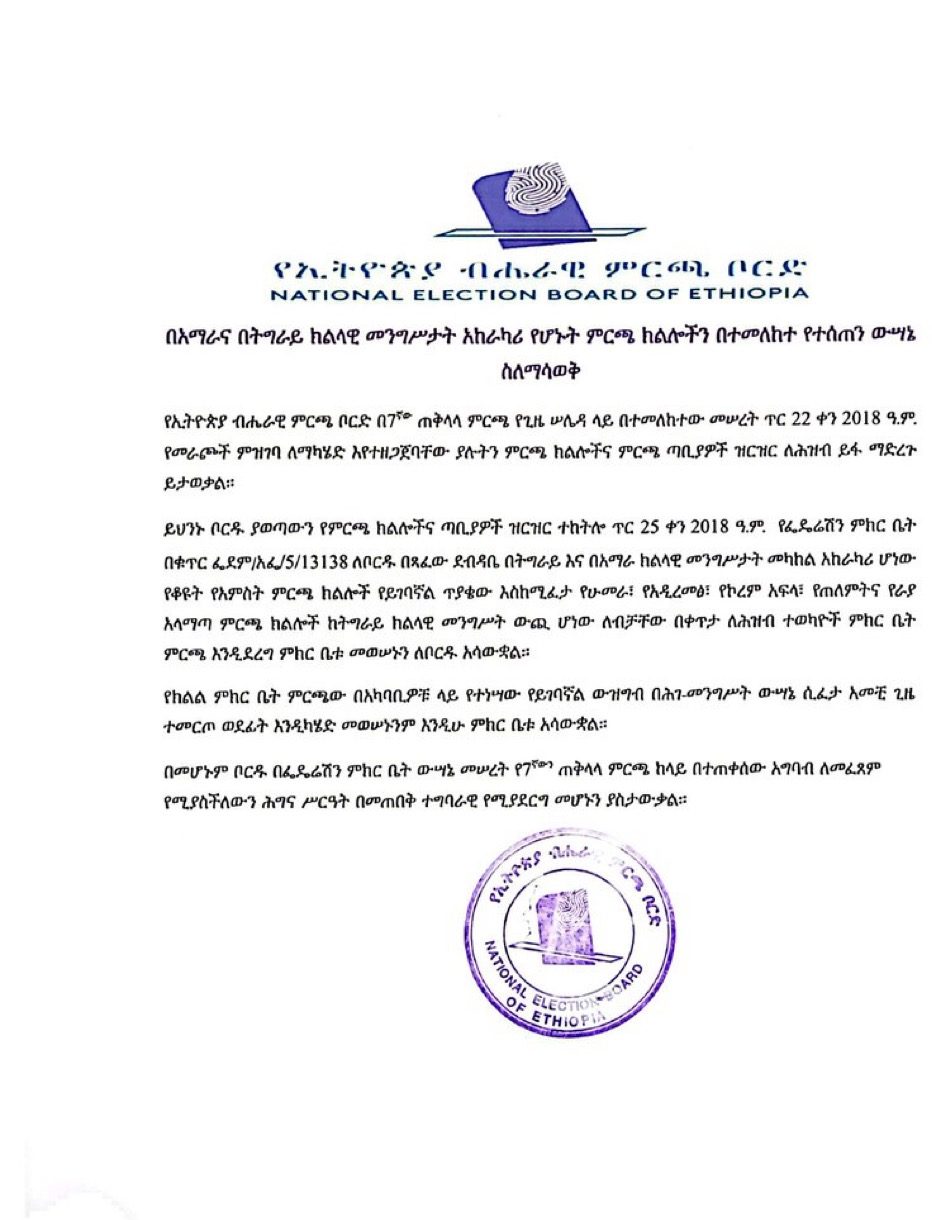
Evidently, the TPLF alliance with Shaebia has undermined the Pretoria peace agreement. The TPLF’s ill-thought strategy has given the green light for the federal government of Ethiopia to put Western Tigray and Ray Ofla under the hospice of the House of the Federation. As a result, the National Election Board of Ethiopia (NEBE) is scheduling the next election in Western Tigray, Tselemti, Alamata, Korean, and Ofla under the auspices of the House of the Federation, citing that these territories are disputed areas and effectively taking Tigray’s territories unconstitutionally, which is against the Pretoria peace agreement. All Tegaru must unite to condemn the illegal confiscation and occupation of Tigray’s territories that violates constitutional order of regional states. The federal government must reverse this illegal decision, uphold the constitution, and implement the Pretoria peace agreement without delay to maintain lasting peace.
This is a tough time and hardship for Tigrayans. We are surrounded by hostile forces. The genocidal forces are occupying our lands. We are facing threats of another war. The TPLF leadership, controlled by a few individuals with limited concern for the people of Tigray’s security, bears no responsibility and accountability for the problems we are facing. The TPLF leadership is only focusing on consolidating its power and rhetoric of war, disregarding Tigray’s peace and security.
Despite the threat of another war, internal divisions persist, and discord remains prevalent. There is considerable work to be done ahead, bearing in mind that “time and tide wait for no one.” Let us remain hopeful and work together for peace during these difficult times.