
HORN OF AFRICA GEOPOLITICAL REVIEW (HAGR)
Author: Dr. Dawit Tesfay, Post-War Military, Security & Transitional Justice Affairs Expert
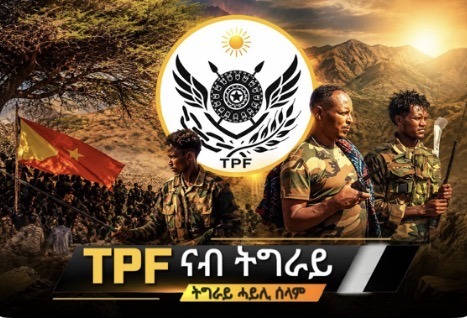
“THE FORCES OF GOOD HAVE ARRIVED.”
Why the TPF integration into the Coalition for Peace in Central Tigray (CPCT) was the wisest strategic decision in post-war Tigrayan politics—and why the TPLF disarmament is now the defining imperative to librate Tigray from repression?
How a disciplined peace force closes the power vacuum and ends the TPLF’s gun-based governance, and opens the only viable path to Tigray that is finally and genuinely free?
Classification: Strategic Validation and Forward Policy Assessment
For: CPCT Leadership, TPF Command, Ethiopian Federal Security Partner, International Peace Building Community, Tigrayan Civic Society, and Diaspora Policy Networks
“The measure of a wise decision is not how it feels in the moment it is made. It is what it prevents, what it enables, and what future it makes possible.”
“A gun in the hands of those who serve the people is protection. A gun in the hands of those who serve only themselves is oppression. The difference between the TPLF and the TPF is precisely this difference.” — Dr. Dawit Tesfay
OPENING STRATEGIC VALIDATION: THE DECISION THAT CHANGED EVERYTHING
History will record the integration of the Tigray Peace Force into the Coalition for Peace and Change in Tigray as one of the most consequential and the most strategically sound decisions made by any political actor in the Horn of Africa in the post-war period.
It will be recorded this way not because it was popular—it was not universally popular. Not because it was without controversy—the TPLF’s propaganda apparatus worked overtime to delegitimize it from the moment it was announced. And not because it was easy — the institutional, political, and logistical challenges of integrating a disciplined military force into a broad civilian political coalition are genuine and demanding.
It will be recorded as consequential and sound because it was correct. Because it addressed the most fundamental strategic reality of Tigrayan politics with the kind of clear-eyed honesty that most political movements spend years avoiding. And because it created — for the first time in Tigray’s post-war history—a comprehensive political-security architecture capable not merely of articulating the aspiration for change but of compelling it.
This document is both a validation of that decision and a forward-looking strategic assessment of what must happen next—because the decision to integrate the TPF was the beginning of a strategic transformation, not its completion. The most important work lies ahead. And the most important work is this: the systematic, comprehensive, irreversible disarmament of the TPLF’s military warlords and the complete dismantling of the gun-based power structure that has imprisoned Tigray’s people for decades.
PART ONE: WHY THE INTEGRATION WAS WISE—THE FULL STRATEGIC VALIDATION
The First Reason: It Confronted the Core Truth That Everyone Else Was Avoiding
The most important thing about the decision to integrate the TPF into the CPCT coalition is what it acknowledged — publicly, institutionally, and without apology.
It acknowledged that the TPLF is not primarily a political problem with a political solution. It is a military-political system—an organization whose power flows from the barrel of a gun and that will not surrender that power in response to moral arguments, electoral pressure, diplomatic appeals, or the weight of public opinion. It acknowledged that confronting this system requires a response that matches its nature—not in brutality, not in the abandonment of democratic values, but in the sober recognition that organized, disciplined, principled military force is a necessary component of any strategy capable of compelling genuine political transition.
Every political movement that has tried to navigate the post-war Tigrayan political landscape without this acknowledgment has eventually discovered the same painful truth. The TPLF absorbs political pressure. It manages opposition. It co-opts what it can, suppresses what it cannot co-opt, and continues operating the machinery of coercive governance regardless of the volume of criticism directed at it.
The Coalition for Peace in Central Tigray (CPCT), by integrating the Tigray Peace Force (TPF), made a different choice. It chose strategic honesty over political comfort. It chose comprehensive capability over narrow political purity. And it chose the long-term welfare of the Tigrayan people over the short-term convenience of an opposition posture that avoided the hardest questions.
That choice was wise. It was necessary. And it was right.
The Second Reason: It Closed the Power Vacuum Before It Could Open
This point deserves to be stated with absolute clarity because it represents perhaps the most significant long-term contribution of the TPF integration decision.
In every political transition — in every moment when an entrenched governing system loses its grip — the most dangerous period is not the moment of transition itself. It is the period immediately after, when the old system’s control has weakened but before new institutional structures have consolidated sufficient authority to maintain order, protect civilians, and prevent the emergence of competing armed actors who will fill whatever space is left unguarded.
This power vacuum is where post-conflict societies go wrong. It is where democratic transitions become armed conflicts. Whereas peace agreements become catalysts for renewed violence. Whereas the populations that suffered most under the old system discover, to their horror, that the transition has delivered not liberation but a new and differently constituted form of chaos.
Tigray, in the absence of the TPF integration decision, faced precisely this risk. The TPLF’s eventual loss of control — whether through military defeat, political marginalization, or institutional collapse — would have created exactly this kind of dangerous vacuum. And into that vacuum would have rushed every armed faction, every regional militia, every opportunistic actor who saw in Tigray’s moment of vulnerability an opportunity for their own advancement.
The TPF’s integration into the CPCT coalition means this vacuum will not materialize. When the TPLF’s coercive power finally, irreversibly recedes—and it will recede, because no system built on force alone survives indefinitely—there is already an organized, disciplined, legitimate, coalition-integrated security force in place to maintain order, protect civilians, and provide the security conditions within which genuine democratic governance can consolidate.
This is not a small thing. It is one of the most consequential contributions any single strategic decision can make to a political transition. The TPF integration decision prevented the power vacuum before it could become a crisis. That prevention is worth more than any amount of retrospective management of the consequences of a vacuum that was allowed to form.
The Third Reason: It Established the Moral Distinction That Changes Everything
The TPLF’s most powerful long-term political asset has not been its military capacity. It has been its claimed moral authority—its narrative that it represents Tigray, speaks for Tigray, and fights for Tigray. This narrative, however disconnected from the reality of its actual governance, has been the ideological foundation of its political dominance and the source of its ability to frame every challenge to its authority as a challenge to Tigray itself.
The TPF integration decision—more than any political statement, more than any diplomatic initiative, more than any civil society campaign—strikes directly at this narrative.
Because the TPF is not an external force. It is not a federal imposition. It is not an anti-Tigrayan instrument. It was Tigrayans—former TDF fighters, mid-level commanders, and soldiers who bled for Tigray—who looked at the TPLF’s post-war governance and made the morally courageous decision that they would no longer serve an organization that had betrayed the people they fought to protect.
When the TPF stands alongside the CPCT coalition and says, in effect, “We are Tigrayan, we are soldiers, and we believe the TPLF must go,” that statement cannot be dismissed with the TPLF’s standard counter-narrative about foreign interference and anti-Tigrayan agendas. It punctures that narrative in a way that nothing else can — because the people making the statement are the very people the narrative claims to speak for.
The moral distinction between the TPF and the TPLF is therefore not just an ethical point. It is a strategic weapon of the highest order. The TPF are the forces of good—not because they are perfect, not because their journey has been without difficulty, but because they made the right choice at the right moment for the right reasons. They chose their people over their organization. They chose Tigray’s future over the TPLF’s past. And that choice defines everything.
PART TWO: THE CENTRAL IMPERATIVE — TPLF DISARMAMENT
Without the guns, the TPLF cannot sustain its power. Without Its Power, Tigray Can Finally Breathe.
Chapter One: The Iron Logic of TPLF Disarmament
There is a simple truth at the heart of Tigrayan politics that every analysis eventually arrives at and that no serious strategy can afford to avoid:
The TPLF’s political power and its military power are not separable. Remove one, and the other collapses. Permit one to survive, and the other will reconstitute itself.
This is not an ideological claim. It is a structural observation about how the TPLF operates — an observation that the TPLF’s own behavior has confirmed repeatedly and consistently. Every time political pressure has mounted, the TPLF has reached for its military capacity. Every time its military capacity has been constrained, it has used its political networks to rebuild it. The Giffa operations currently underway in Tigray are the most recent and most explicit demonstration of this dynamic: an organization whose political legitimacy has collapsed, using forced military conscription to rebuild the coercive capacity that political legitimacy can no longer sustain.
The conclusion that flows from this structural observation is unambiguous. The TPLF’s so-called core and above-the-core military leadership — the warlords who command its armed capacity and whose personal power depends entirely on maintaining that armed capacity — must be disarmed. Completely. Verifiably. Irreversibly. By all means necessary and available under Ethiopian and international law.
This is not vengeance. It is not punishment. It is the most basic requirement of any sustainable political transition—the requirement that political competition occur within a framework where force is not a legitimate instrument of political authority, where elections rather than weapons determine who governs, and where the population’s choice rather than the warlord’s calculation determines Tigray’s future.
Chapter Two: What TPLF Disarmament Actually Requires
Disarming the TPLF is not a single military operation. It is a sustained, multi-dimensional strategic campaign that must operate simultaneously across military, political, legal, economic, and psychological dimensions. Understanding what it actually requires is the prerequisite for doing it effectively.
The Military Dimension: Degrading Coercive Capacity
The direct military component of TPLF disarmament requires the systematic degradation of the organizational capacity that enables forced military mobilization—the command networks that organize Giffa operations, the logistics infrastructure that moves conscripted soldiers from collection points to training facilities, the financial flows that sustain TPLF military payroll, and the intelligence apparatus that identifies and targets draft resisters and their families.
The TPF’s unique institutional knowledge of the TDF/TPLF military structure—its command hierarchies, its logistical patterns, and its personnel networks—makes it an invaluable partner in this military dimension of the disarmament campaign. Former insiders who understand how the system operates are irreplaceable assets in designing strategies to disrupt it.
Federal security forces, operating in coordination with the TPF under the CPCT coalition’s civilian political direction, provide the operational capacity to enforce disarmament requirements in areas where TPLF resistance is concentrated. The integration of TPF institutional knowledge with federal operational capacity is exactly the kind of force multiplication that the disarmament campaign requires.
The Legal Dimension: Accountability Without Impunity
The TPLF’s senior military leadership—the “core and above-the-core” warlords who ordered and supervised the Giffa operations, who directed atrocities during the 2020–2022 war, and who have systematically violated the Pretoria Agreement—must face individual legal accountability under both Ethiopian domestic law and applicable international legal frameworks.
This legal accountability serves multiple strategic functions simultaneously. It removes specific individuals whose continued freedom represents a sustained threat to the disarmament process. It creates deterrent effects for others who might consider resuming armed activity after the immediate disarmament pressure recedes. It demonstrates to the Tigrayan population and the international community that the transition is governed by law rather than by revenge. And it establishes the principle—essential for any sustainable peace—that organized political violence has consequences that cannot be escaped through political negotiation alone.
The CPCT coalition must actively advocate for the development of specific legal accountability mechanisms—coordinated between the Ethiopian federal justice system and relevant international accountability bodies—that address the documented conduct of named TPLF military leaders. This advocacy must be pursued in parallel with the military and political dimensions of the disarmament campaign, not sequenced after them.
The Economic Dimension: Cutting the Financial Lifeline
The TPLF’s military capacity does not sustain itself on ideology. It sustains itself on money—on the financial flows that pay soldiers, purchase weapons and supplies, maintain logistics infrastructure, and fund the patronage networks that sustain organizational loyalty. Disrupting these financial flows is therefore a necessary component of the disarmament strategy.
This requires systematic investigation and interdiction of the financial networks that connect TPLF-affiliated businesses, diaspora fundraising operations, and external patronage sources — including the Egyptian and Eritrean connections documented in our previous analysis — to TPLF military financing. It requires cooperation between Ethiopian federal financial intelligence agencies, international financial monitoring bodies, and the diaspora community organizations that are best positioned to identify and expose TPLF-affiliated fundraising operations.
An organization that cannot pay its soldiers cannot sustain its military. An organization that cannot sustain its military cannot enforce its political dominance through force. Financial disruption is not a peripheral component of the disarmament strategy. It is one of its central pillars.
The Psychological Dimension: Breaking the Fear That Sustains Compliance
Perhaps the most underappreciated dimension of TPLF disarmament is the psychological dimension—the need to break the culture of fear that has sustained compliance with TPLF authority among ordinary Tigrayans who do not support the organization but who have lacked the security conditions and the credible alternatives needed to actively resist it.
Fear is an extraordinarily effective governance tool in the absence of alternatives. When compliance with an organization’s demands is the only visible path to personal safety and when resistance appears to offer only greater danger, most people—not from cowardice but from rational self-preservation—comply. The TPLF has governed Tigray significantly through the management of this fear calculation.
The TPF’s presence — visible, organized, and credibly capable of protecting communities from TPLF retaliation — directly changes this calculation. When there is a credible alternative security provider, when resistance no longer means vulnerability to unopposed TPLF retaliation, the fear calculation shifts. Compliance with TPLF demands becomes a choice rather than a necessity. And when it becomes a choice, many Tigrayans who have been complying from fear rather than conviction will make a different choice.
This psychological dimension of disarmament — the systematic demonstration that the TPLF is no longer the only viable security provider in Tigray — is one of the TPF’s most important strategic contributions. Its presence does not just deter TPLF aggression. It liberates ordinary Tigrayans from the fear that has made them captive to an organization they never chose.
Chapter Three: The “Core and Above-the-Core” — Who Must Be Disarmed and Why
The TPLF’s military leadership is not a monolithic structure. It has a hierarchy—and understanding that hierarchy is essential for designing a disarmament strategy that is both effective and proportionate.
The “core and above-the-core” designation refers specifically to the senior military warlords—the commanders who possess the organizational authority, the institutional relationships, the personal networks, and the strategic capability to reconstitute TPLF military capacity after any partial disarmament effort. These individuals are the system’s irreplaceable nodes. Disarming ordinary soldiers while leaving the command architecture intact achieves nothing sustainable—the command architecture will simply rebuild the force it commanded through new Giffa operations, new conscription campaigns, and new cycles of coercion.
Complete, sustainable disarmament requires the systematic targeting of this command architecture — through legal accountability proceedings, through the defection and realignment of subordinate commanders who have aligned with the TPF, through the disruption of the financial and logistical networks that these commanders depend on, and through the federal security operations that enforce disarmament requirements with the credible application of force where necessary.
This is demanding. It is not quick. It requires sustained institutional commitment across multiple dimensions over an extended period. But it is the only path to disarmament that actually disarms — that produces a Tigray in which the TPLF’s warlords genuinely cannot rebuild what they have lost, rather than a Tigray in which the visible indicators of disarmament have been achieved while the underlying capacity for reconstitution remains intact.
PART THREE: THE POST-TPLF TIGRAY
What the Future Looks Like — and How to Build It
Chapter Four: The Vision — A Tigray That Has Never Existed Before
The political vision that must animate every component of the CPCT-TPF coalition’s strategy is not merely the removal of the TPLF from power. Removal of an old system without construction of a new one produces a vacuum, not liberation. The vision must be specific, compelling, and credible enough to inspire the sustained commitment that genuine transformation requires.
The post-TPLF Tigray that the coalition must build is a region in which political authority derives from genuine democratic consent rather than from military dominance. In which security forces serve the population rather than the governing party. In which economic opportunity is distributed based on merit and effort rather than party loyalty. In which justice applies equally to all citizens regardless of their political connections. In which the people of Tigray—who have suffered more than any civilian population should ever be required to suffer—can finally live without fear of their own government.
This is not a utopian vision. It is a specific, achievable description of what normal democratic governance looks like—governance that most of the world takes for granted but that the people of Tigray have never experienced under TPLF rule.
Building it requires the simultaneous construction of institutions that have never properly existed in Tigray — genuinely independent courts, genuinely professional and non-partisan security forces, genuinely transparent public financial management, genuinely free media, and genuinely competitive electoral processes in which the outcome is determined by voters rather than by whoever controls the most guns.
The TPF’s ultimate institutional destiny—once the TPLF’s military dominance has been dismantled and genuine political transition has been secured—is to transform itself from a coalition-aligned security force into exactly the kind of genuinely non-partisan, professionally commanded, democratically accountable regional security institution that post-TPLF Tigray will need to sustain its democratic governance. This transformation must be planned from the beginning, not improvised after the fact. The TPF’s leadership must understand from the outset that their organization’s success is ultimately measured not by what it defeats but by what it builds—and what it builds must be an institution that serves all Tigrayans equally, regardless of their political views.
Chapter Five: Reconstruction, Justice, and Reconciliation — The Three Pillars of Sustainable Peace
Military disarmament and political transition create the conditions for sustainable peace. They do not, by themselves, create sustainable peace. Three additional pillars must be constructed simultaneously to ensure that the political transition produces a genuinely stable and just outcome rather than merely a different distribution of power within an unchanged political culture.
Economic Reconstruction
Tigray’s economy was devastated by the 2020–2022 war to a degree that has not been adequately communicated to or understood by the international community. Agricultural infrastructure was destroyed. Healthcare facilities were demolished. Educational institutions were shuttered. Trade networks were severed. The professional class—the doctors, engineers, teachers, and administrators who are the foundation of any functioning regional economy—was displaced, killed, or driven into exile.
Rebuilding this economy is not merely a humanitarian imperative. It is a political security imperative. An economically devastated population is a population that is vulnerable to the politics of desperation — vulnerable to the manipulation of warlords who offer material resources in exchange for political loyalty. Economic reconstruction that creates genuine opportunity, that distributes that opportunity fairly across communities regardless of political affiliation, and that builds the private sector foundations of economic independence rather than the patron-client dependencies of political patronage—this is the economic foundation on which sustainable democratic governance can be built.
The CPCT coalition’s economic reconstruction agenda must be specific, detailed, and credible. It must address agricultural recovery, infrastructure rebuilding, healthcare system restoration, educational system rehabilitation, and the creation of the regulatory and financial frameworks that attract genuine private investment. It must be designed specifically to break the patron-client economic relationships that have been the TPLF’s most effective long-term tool of political control.
Transitional Justice
The 2020–2022 war produced atrocities of a scale and character that cannot be papered over with diplomatic language about moving forward. The Tigrayan population experienced documented war crimes. They experienced forced displacement on a massive scale. They experienced a deliberate blockade of humanitarian aid that caused preventable deaths from starvation and disease. They experienced sexual violence deployed as a weapon of war. They experienced the destruction of cultural heritage and civilian infrastructure that had no military significance.
The people who experienced these things are still alive. Their memories are intact. Their need for acknowledgment, for accountability, and for some form of justice that validates their experience rather than dismissing it in the name of political convenience—this need is real, it is legitimate, and it will not disappear because it is inconvenient for political transition processes.
The CPCT coalition must champion a transitional justice framework that is serious, specific, and applied consistently regardless of which actor committed which atrocity. The TPLF’s warlords who directed atrocities must face accountability. But so must the Eritrean commanders whose forces committed documented crimes in Tigray and the Ethiopian federal military and allied militia commanders whose conduct warrants accountability. Selective justice — accountability for enemies, impunity for allies — is not justice. It is a different form of political manipulation, and it will not build the cross-community trust that sustainable peace requires.
Reconciliation Within Tigray and Beyond
Tigray’s path to sustainable peace requires reconciliation — genuine, honest, difficult reconciliation — at multiple levels simultaneously.
Within Tigray, there are communities that supported the TPLF and communities that opposed it. There are families that participated in the violence and families that suffered from it. There are ethnic Tigrayans who served in TPLF-aligned forces and individuals from other communities whose experience of those forces was one of victimization. These internal divisions, if left unaddressed, will fester into sources of renewed conflict long after the TPLF’s military dominance has ended.
Between Tigray and the rest of Ethiopia, there is a decade of accumulated grievance, mistrust, and mutual fear that cannot simply be wished away by a peace agreement. Building the genuine mutual understanding and institutional trust that sustainable federal coexistence requires is generational work — but it begins with specific, concrete steps: honest acknowledgment of atrocities committed by all parties, genuine humanitarian support for affected communities across ethnic lines, inclusive political processes that give all communities a genuine stake in the outcome, and sustained diplomatic investment in the human relationships that political agreements alone cannot create.
PART FOUR: THE FINAL STRATEGIC ASSESSMENT
Where We Stand, What Must Happen, and Why History Is Watching
Chapter Six: The Moment We Are In — An Honest Assessment
The integration of the TPF into the CPCT coalition has created a strategic opening that did not exist before and that may not remain open indefinitely. Strategic openings are not permanent features of political landscapes. They are moments—created by the convergence of specific conditions, available to actors who are prepared to move decisively, and lost to actors who hesitate too long.
The current moment offers the following specific strategic advantages that the coalition must exploit before conditions change.
The TPLF is at its weakest point in decades—politically delegitimized; internally fractured; militarily degraded by the combination of the 2022 war’s consequences and the defection of significant portions of its mid-level officer corps to the TPF; and diplomatically isolated in ways that its Ximdo gamble failed to reverse. Its Giffa operations are a sign of desperation, not strength. An organization that must force its people at gunpoint to fill its ranks is not an organization that is winning.
The federal government has a clear strategic interest in supporting the CPCT-TPF coalition’s disarmament agenda because it aligns directly with federal objectives for Tigrayan political stabilization. This alignment creates a window for federal-coalition cooperation that must be institutionalized while the political conditions favor it.
The international community’s patience with the TPLF — never particularly robust — has been further eroded by the documented Giffa operations and the TPLF’s systematic violations of the Pretoria Agreement. International organizations, diplomatic missions, and donor governments that have been cautious about explicitly supporting the TPLF’s opponents are increasingly willing to engage with the coalition framework that the CPCT-TPF integration represents.
These conditions will not last forever. They must be used now.
Chapter Seven: The Message to the TPLF’s Remaining Followers
This analysis closes with a direct message to the individuals—the soldiers, the mid-level commanders, the local administrators, and the ordinary party members—who are still operating within the TPLF’s organizational structure, not from conviction but from the calculations of survival that an entrenched authoritarian system makes rational.
The calculation has changed. The TPF exists. The CPCT coalition is real and growing. The federal security architecture is aligned against the TPLF’s continued armed dominance. The international community is increasingly explicitly critical of the TPLF’s conduct. And the TPLF’s senior warlords — the people whose personal political survival your continued loyalty is protecting — have demonstrated, with the Giffa operations and with their systematic violations of the peace agreement, that they are willing to sacrifice you and your families for their own survival.
The choice being offered to you is not between the TPLF and its enemies. It is between a future in which you remain bound to an organization whose trajectory points toward destruction and a future in which you exercise the same moral courage that the TPF’s founders exercised—the courage to choose your people over your organization, Tigray’s future over the TPLF’s past.
The TPF integration into the CPCT coalition was a great decision. It was wise. It was strategic. And it created an alternative that did not previously exist — an alternative that is credible, that is organized, and that represents a genuine path toward the Tigray that the people who fought its wars actually deserve.
That path is open. Walk it.
CONCLUSION
“The forces of good have arrived in Tigray. They came not from outside. They came from within—from the ranks of the soldiers who chose their people over their party, who chose the future over the past, and who chose Tigray’s genuine liberation over the TPLF’s manufactured version of it.”
“Without the guns, the TPLF is nothing. It always was nothing without the guns. Disarm the warlords—completely, verifiably, irreversibly—and what remains is not a political force. It is an organization without a future, making arguments that no one with a choice would choose to believe.”
“The power vacuum will not come. Because the TPF is already there. Already organized. Already disciplined. Already integrated into a coalition that represents a genuine political alternative. The vacuum that the TPLF feared the most — the vacuum of its own relevance — is the only vacuum that will be created. And that vacuum, unlike the ones the TPLF creates through coercion, is one that Tigray’s people will fill with something genuinely worth building.”
“Tigray’s long nightmare is not yet over. But it has a credible path to its ending. And for the first time in decades, that path does not run through the TPLF.”
The views expressed in this article are the author’s own and do not necessarily reflect TLM’s editorial stance.
Strategic Validation and Forward Policy Assessment prepared by:
HORN OF AFRICA GEOPOLITICAL REVIEW (HAGR)
Independent Regional & International Geostrategy
Security · Military · Political · Legal Analysis
Author: Dr. Dawit Tesfay, Post-War Military, Security & Transitional Justice Affairs Expert
Publication: 2026 | Coalition Security Architecture
Classification: Strategic Priority — Full Public Distribution
“The people of Tigray have already paid the price of liberation—twice over. The only acceptable return on that payment is a Tigray that is genuinely, durably, irreversibly free. The TPF integration into the CPCT is the most important single step yet taken toward that return. The work of disarmament, reconstruction, and institutional building that must follow is the completion of what that step began.” — Dr. Dawit Tesfay, 2026